Looking for marshes, wetlands, ponds and adjacent agricultural land that can be conserved, rewilded, and sowed with wild rice and wetland plants, to blend wetland conservation, production of wild rice, wetland plants seed gathering and waterfowl nature areas for migration, resting, nesting and raising of young.
Preferred location: Genesee, Hillsdale, Jackson, Lapeer, Lenawee, Livingston, Macomb, Monroe, Oakland, St. Clair, Washtenaw, Wayne
Desired Transitional Agreement: Farm Seeker/Farm Owner Partnership, Lease, Lease to buy, Sale, Mentorship, Working arrangement with future partner
Jan 15, 2026
Desired Acreage
- 26-100 Acres
- 101-250 Acres
- 251-500 Acres
Desired Infrastructure
Desired Land Usage
Goals, Values, Vision
In 2025, our family began exploring ways to protect and enhance wetland ecosystems while maintaining a productive agricultural model. This exploration led us to Michigan wild rice, or Manoomin—the state’s official native grain and an aquatic grass that thrives in shallow, slow-moving waters. Unlike cultivated rice, Manoomin offers exceptional nutritional value and holds deep cultural significance. Our goal is to establish a commercial wild rice operation in Michigan while restoring wetlands through the cultivation of diverse native wetland plant species. With increasing public and private investment in wetland restoration, there is a growing demand for hand-harvested native wetland seed—creating a unique opportunity to blend conservation with sustainable agricultural production.
The intentional integration of wetlands and adjacent grasslands will create high-quality nesting and brood-rearing habitat for waterfowl such as mallards, blue-winged teal, and geese, while also supporting grassland songbirds and pollinators, including monarch butterflies and native bee species. We plan to collaborate with the Michigan Department of Natural Resources, wetland management agencies, and conservation partners to provide nesting habitat for hundreds of birds and essential resting areas for thousands of migrating waterfowl. Our approach emphasizes establishing baseline biodiversity data and implementing light-touch management strategies focused on protecting existing features, enhancing degraded areas, and creating new habitat—all while maintaining or improving land productivity.
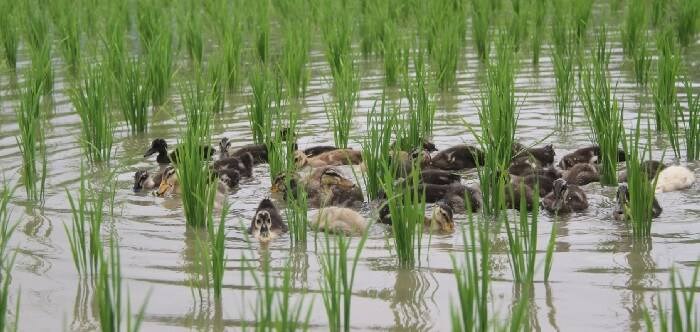
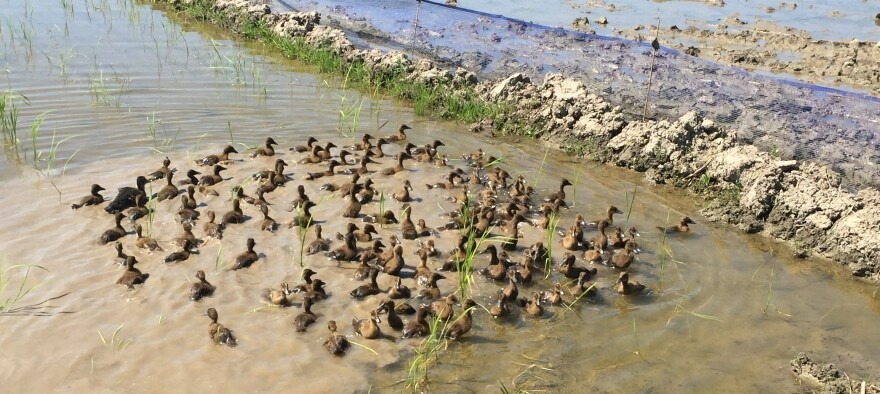
This project also incorporates rice–duck integration, an ecologically based agricultural practice in which ducks are managed within rice paddies to control pests and weeds, naturally fertilize soils, and improve water and soil health. This approach further aligns agricultural production with habitat creation and ecosystem function, reinforcing the project’s regenerative design.
Farming Status
Current Farming Status
Not currently farming, Current active business plan
Farm Experience/Education
Farm employee, Farm internship/apprenticeship
Mentoring
I am seeking mentorship
Farming Plans and Practices
Farming Method
Organic Practices
THE RICE-DUCK FARMING SYSTEM IN RICE FIELD
Rice–Duck Integration, also known as rice–duck farming, is an innovative agricultural practice that combines rice cultivation with the managed use of ducks to improve both productivity and sustainability. This integrated system leverages natural ecological interactions to support healthy crop growth while reducing reliance on chemical inputs.
System Design
In this system, ducks are introduced into flooded rice paddies during the early stages of rice growth, once the plants are established enough to withstand activity. The ducks are allowed to roam freely within the fields, where they forage on weeds, insects, and other pests commonly found in rice paddies.
Benefits
Rice–duck integration provides multiple ecological and agricultural benefits. Ducks naturally control pests and weeds, significantly reducing the need for chemical herbicides and pesticides. Their droppings act as a natural fertilizer, recycling nutrients back into the soil and supporting healthy rice growth. In addition, the movement of ducks through the paddies helps aerate the soil and water, improving nutrient distribution, water infiltration, and root development.
Management Considerations
Successful implementation requires careful timing and field management. Ducks are introduced only after rice plants reach a sufficient height to prevent damage to young seedlings. Ongoing monitoring ensures that duck density and activity levels remain balanced to maximize benefits while protecting the crop.
Challenges
While highly effective, rice–duck integration requires attentive field management. Farmers must carefully balance duck activity with crop protection to prevent overgrazing or plant disturbance. With proper oversight, however, this system offers a sustainable, low-input approach to rice production that benefits both agriculture and the environment.